Eggstreme Farming: How to Sell Chickens (and Other Animals)
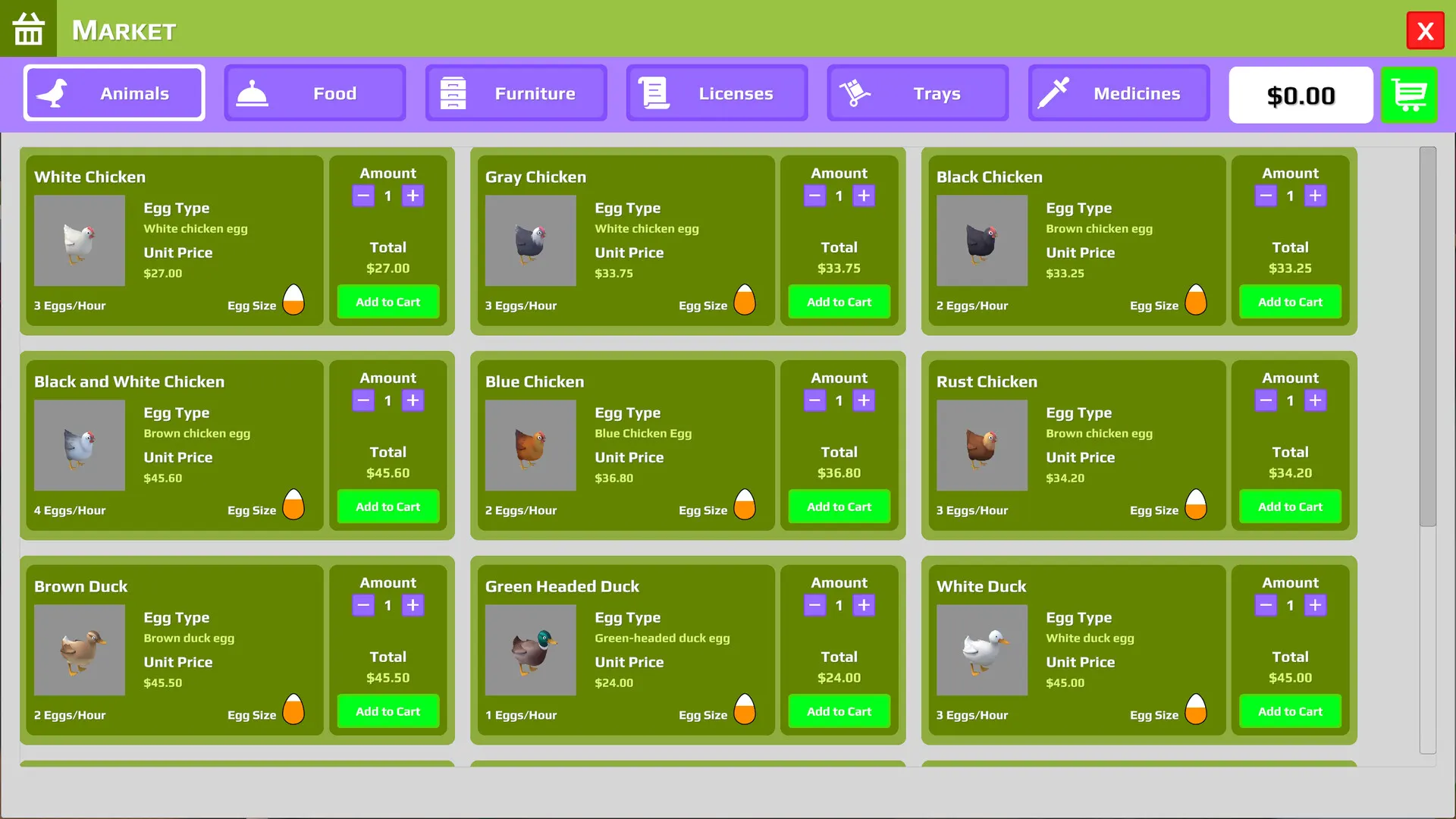
Half the players in launch-week footage tried to sell a chicken at the market kiosk first and got nowhere. Selling works differently — and it’s one of the most useful tools in the game once you find the right machine.
Where to sell: the sell vending machine, not the market
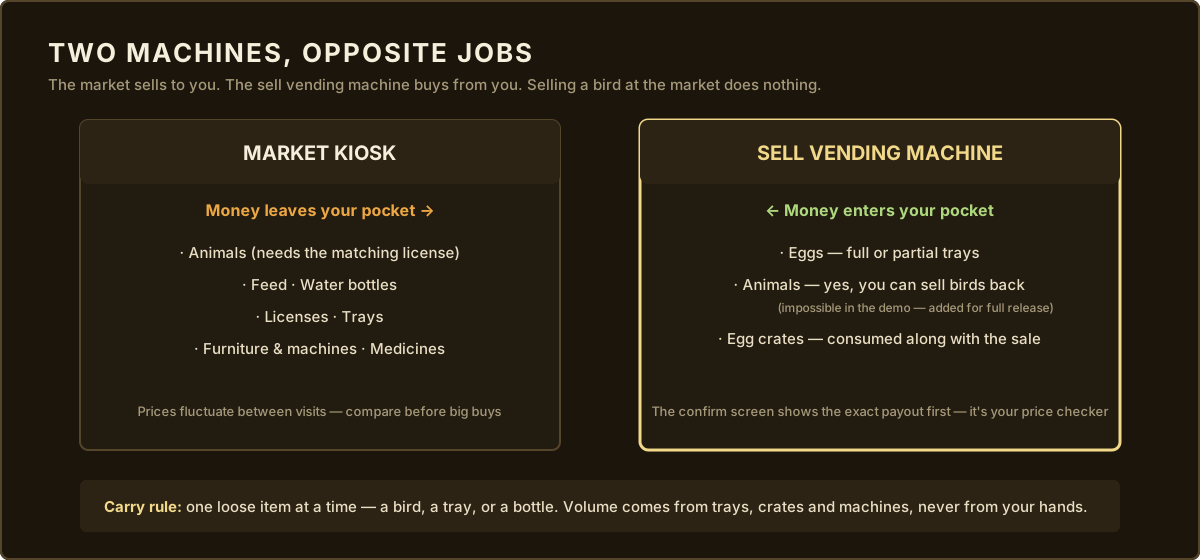
The market sells to you; the sell machine buys from you — animals included.
There are two machines and they look deceptively similar:
-
The market kiosk sells to you: animals, food, furniture, licenses, trays, medicines, water.
-
The sell vending machine buys from you: eggs, animals and egg crates — the confirm screen says exactly that.
The flow: walk into the pen, pick the bird up (you can carry one animal at a time), carry it to the sell machine, and confirm the sale. The bird is gone permanently and the pen slot frees up immediately.
Why sell a chicken?
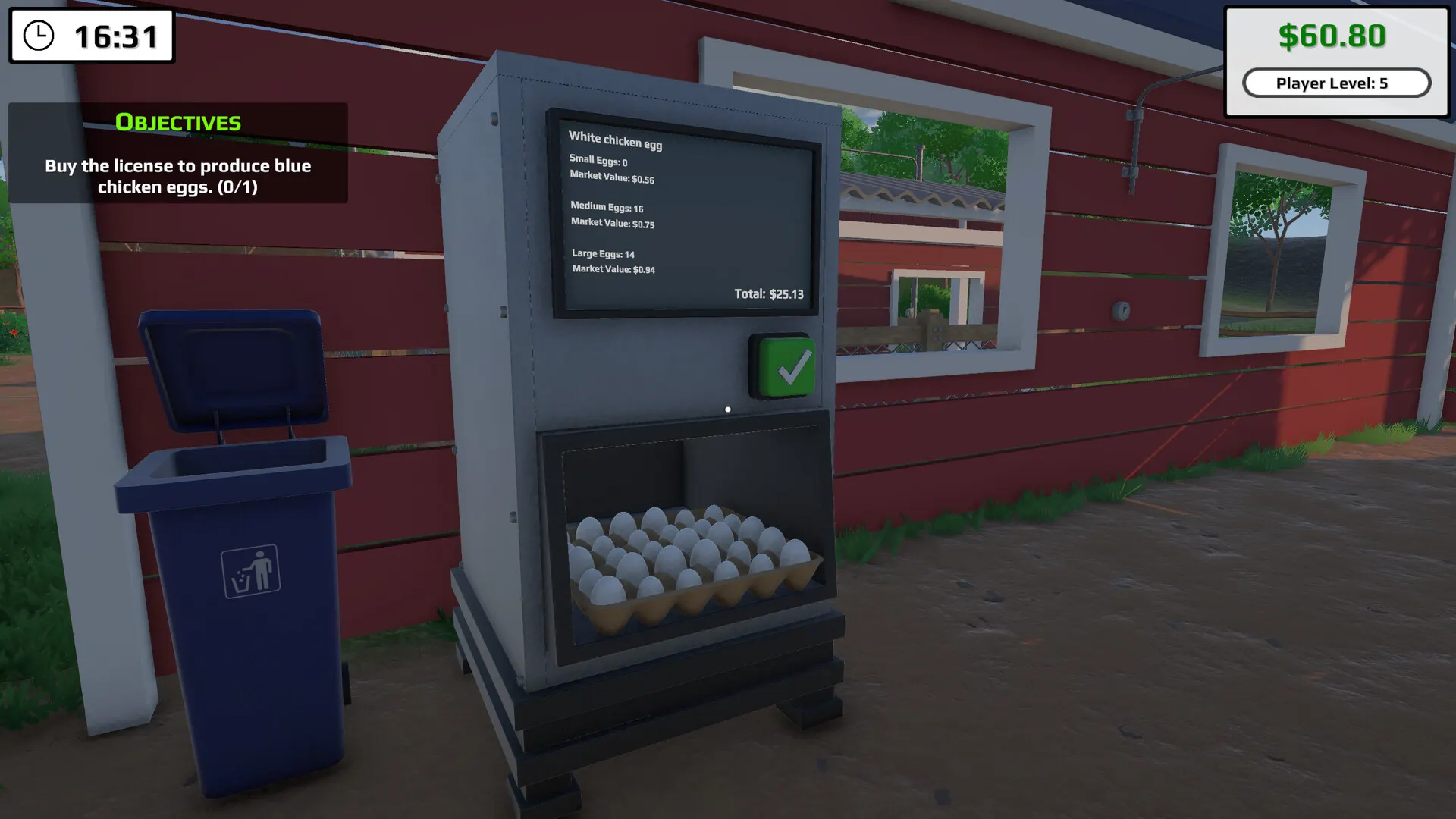
The sell machine shows the exact payout before you confirm — animals and crates sell here too.
1. Flock upgrades. The standard mid-week move: buy a gray chicken, sell a white one, keep the pen at six heads with better eggs. Repeat until the pen is the breed you actually want. Sell-then-upgrade keeps income running during the transition instead of waiting to afford six new birds outright.
2. Emergency cash. The classic launch-week disaster: pen full of eggs, zero money, can’t even afford a tray to put them in. Selling one chicken frees up enough to buy trays, keep the loop alive, and re-buy the bird a day later. It happened on camera within the first hour of release-week streaming — if it happens to you, it’s a speed bump, not a failure. The full recovery checklist is in out of money fixes.
3. Pen reallocation. Switching a pen’s purpose (say, from whites to browns after the license) means liquidating the old flock. Selling, not trashing, is the only sane way — you get paid for the birds.
What do you get paid?
The machine pays part of the animal’s value — clearly less than purchase price, and the exact percentage hasn’t been pinned down yet. Numbers seen in footage are consistent with roughly a third to a half back, but treat any exact figure as unconfirmed: animal market prices already fluctuate between visits, which makes resale math fuzzy by nature.
Things to know before you sell
-
Sold means sold. There’s no buyback or undo; the bird’s randomly assigned name goes with it.
-
Pen rent doesn’t care. A rented pen costs the same daily rent whether it’s full or empty — an empty slot is pure lost income, which is why sell-one-buy-one beats selling in bulk.
-
You can sell any species the same way — ducks, geese, turkeys — as long as you can pick it up and carry it.
-
Plan around laying hours. You’re carrying one bird at a time with no hands free; doing sell-swap runs during a laying hour means eggs piling up unbought trays. Do it right after a sale run or before bed.
-
Don’t sell sick birds cheap. A low-health bird lays badly, but medicine is cheaper than the difference between a healthy replacement and what the machine pays for the old one. See health & medicine.
The one case where you shouldn’t sell
If you’re selling to delete a bird (full pen, no upgrade planned), double-check it’s not your best producer — launch footage has at least one panicked moment of a player almost selling the gray that was carrying the pen. Sort by value in your head: sell the cheapest bird that’s in the way, not the nearest one.