Eggstreme Farming Best Early Game Strategy: A Day-by-Day Plan
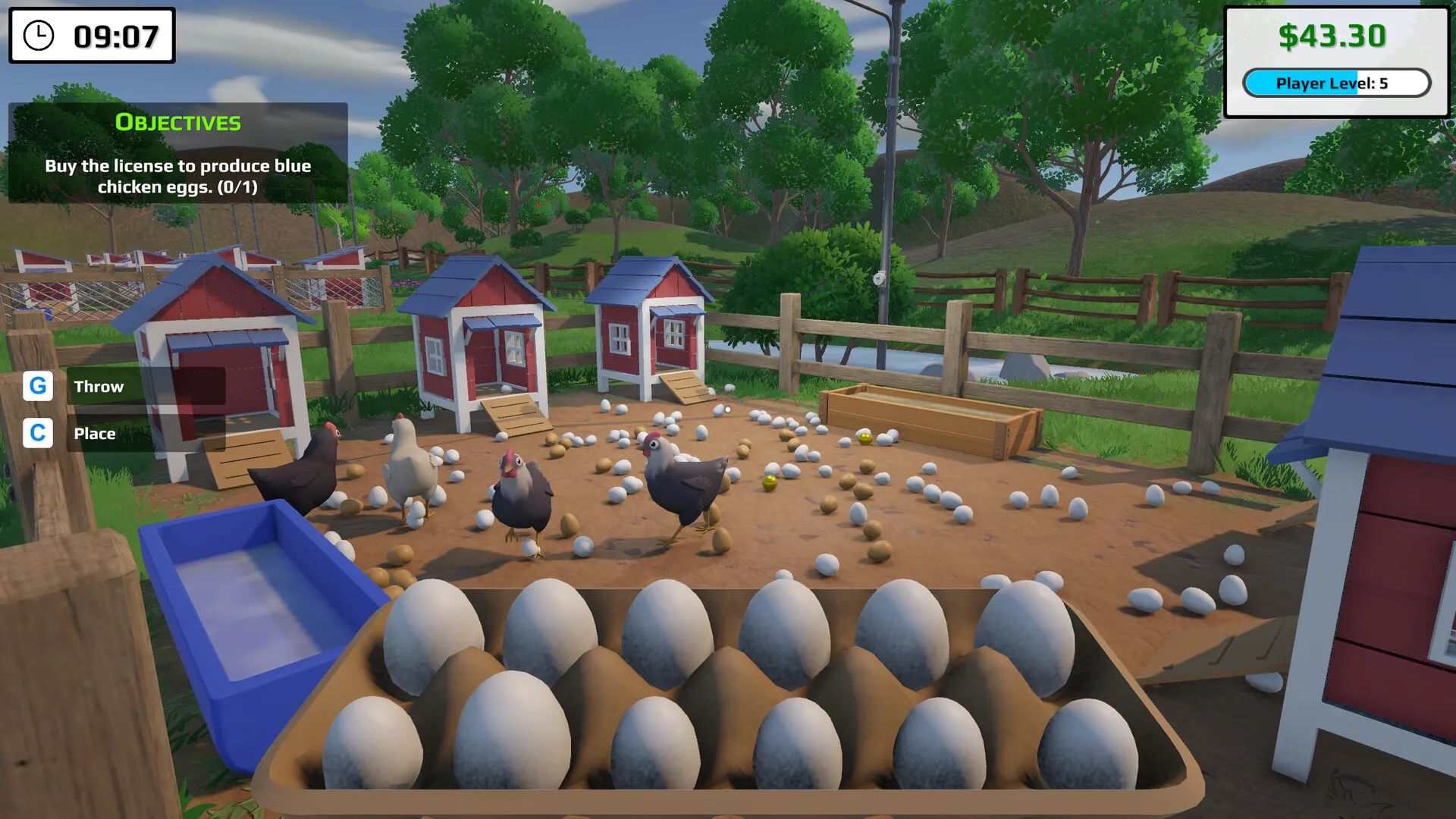
The early game in Eggstreme Farming is cash-starved by design — every dollar wants to be spent three places at once. This is the purchase order that launch-week runs converged on, day by day, with the reasoning for each call.
Day 1: the tutorial is your script
Your $100 covers exactly the starter kit. In order:
-
White chicken egg license (~$40) — Licenses tab.
-
Rent chicken pen 1 (~$3.25/day) — management PC. Pen 1 is closest to the sell machine; daily walking adds up.
-
One white chicken (~$27–32) — yes, one. The tutorial guides you through the whole first laying cycle with a single bird.
-
Feed + water + a pack of trays — organic feed (~$8), a water bottle or two, small trays (5 for ~$2).
-
Clean the pen with the broom before moving the bird in.
-
Follow the objective list through its whole onboarding: collect 20 eggs, sell a tray, refill the food container. It’s a decent checklist and the XP matters at level 1.
-
Sleep when the birds do. Never sit through a night.
End of day 1 you should have: ~1–2 chickens, one sold tray ($6-ish), and possibly the bank’s $30 loan already taken and converted into a second chicken — launch footage’s verdict on the day-one loan was unambiguous (“actually a great deal”). If you’re comfortable with the loop, take the loan on day 1; if it’s your first hour ever, take it on day 2 with the same plan: loan → productive bird → repay from trays.
Day 2: fill the pen
The single highest-return move available: get to six whites. Each new white chicken is ~18 more medium eggs an hour across the pen. Sell trays as they fill and re-invest immediately — six birds produce ~$13–18/hour at early prices, so the pen fills itself out across the day.
Also today:
-
Upgrade to 12-slot trays once you can buy a few; six birds empty small trays fast.
-
Watch water at six heads — it drains noticeably faster than at two.
-
Pay any bill that came due on your sell run. Fines cost more than bills.
Day 3: the gray upgrade + the brown decision
Two moves, in this order:
-
Start replacing whites with grays (one at a time, sell each white at the sell machine to fund part of it). Gray = same 3 eggs/hour at large size — a ~20–25% per-egg raise across the pen, compounding forever.
-
Buy the brown chicken egg license ($45) the moment bank + cash covers license plus one brown-layer bird plus feed and trays. Don’t buy a naked license. If you’re a day short, wait a day — the license produces nothing by itself.
If the market’s prices spike ugly (they fluctuate — see best chickens), it’s fine to spend the day on grays and buy the license tomorrow.
Days 4–7: two income lines, then automation
-
Fill the brown pen toward black-and-whites (rust or black birds as budget placeholders on expensive days). The brown pen is your moneymaker: full trays at $37.50–$45.
-
Keep the white/gray pen running — two steady lines beat one fancy one.
-
Buy the Water Refill Machine ($175) when affordable — it protects every future hour of production.
-
Buy the Egg Collector ($199) when it unlocks (mid-teens level) and start with the busiest pen.
-
Blue license only when everything above is stable. Blue birds are progression, not profit.
The five early-game mistakes that cost days
-
Renting pen 2 before pen 1 is full and self-funding. Rent stacks daily; an empty pen is a hole with a fence around it. The objective list will push you — ignore it.
-
Premium/special feed on day 1–2. The stat bonuses are real but the capacity jump is the actual value, and you don’t have the bird count to need it yet. Organic until the second pen.
-
Buying a license with your last dollars. License + zero animals = dead money for a day. Always price the whole package: license + bird + feed + trays.
-
Skipping the loan out of pride. $4 to move a laying chicken forward by a day or two is the best interest rate you will ever see. The bank scales up later; use it early.
-
Hoarding eggs for a “big sale.” There’s no price timing in this game — the machine pays what it says. Money in unsold trays is money at zero interest. Sell on the hour.
What “ahead of schedule” looks like
By the end of the first week: two full pens (one gray/white, one brown-line), both licenses, water machine installed, collector arriving, and the first duck license in sight. Launch-week streams on this exact plan were pulling $150–200/day across two pens by day 5–7 — from there, the farm progression ladder takes over.